
Senate Moves to Slash $2bn Rice Imports, Advances Agro Bills to Boost Food Security
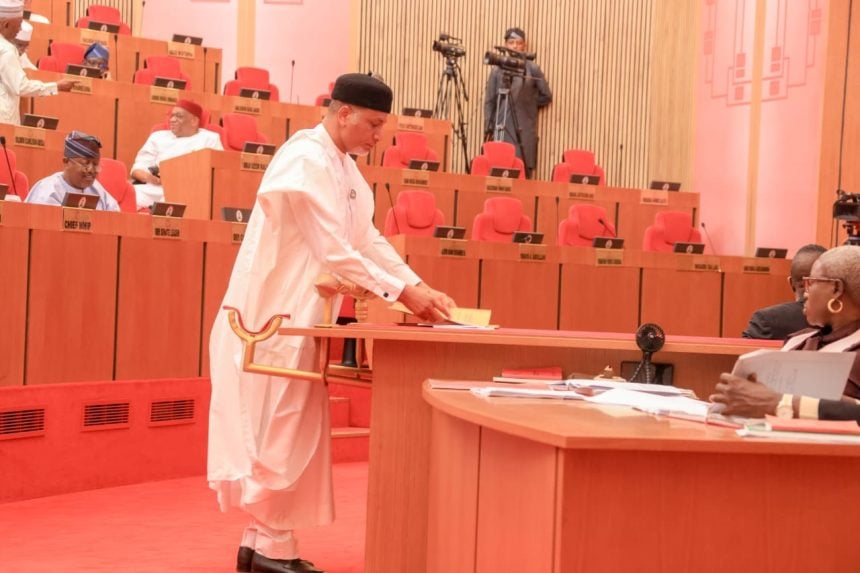
The Senate has taken steps aimed at reducing Nigeria’s estimated $2 billion annual spending on rice imports by advancing key agricultural bills designed to strengthen local food production and improve food security.
The development followed the presentation of committee reports on three major bills during plenary on Wednesday.
The bills include the National Food Reserve Agency Bill and the Mandatory Cassava Inclusion in Flour Production Bill—both sponsored by Senator Saliu Mustapha (Kwara Central)—as well as the National Rice Council Board Bill sponsored by Senator Adamu Aliero (Kebbi Central).
Presenting the reports, Senator Mustapha, who chairs the Senate Committee on Agricultural Production Services and Rural Development, said the proposed legislation is aimed at transforming Nigeria’s agricultural sector in line with the federal government’s food security and economic diversification agenda.
He explained that the National Food Reserve Agency Bill seeks to establish a structured system for storing grains and stabilising food prices during shortages and market fluctuations.
The Cassava Inclusion in Flour Production Bill proposes a mandatory 20 per cent cassava content in flour production, a policy intended to reduce dependence on imported wheat while boosting local cassava production and processing.
On the rice sector, Mustapha described the National Rice Council Board Bill as a strategic intervention to coordinate production, processing, and distribution of rice across Nigeria, with the goal of reducing import dependence.
He noted that Nigeria’s heavy rice import bill places pressure on foreign exchange reserves and that strengthening local production would enhance economic stability and job creation.
“The goal is to build a full agricultural value chain, from farm to reserve, to processing,” Mustapha said during his presentation.
He added that the proposed reforms would promote self-sufficiency, strengthen rural economies, and improve food availability nationwide.
Following deliberations, the Senate unanimously passed the bills for second reading. They have now been forwarded to the House of Representatives for concurrence before being transmitted to the President for assent.







Comments
This post currently has no comments.