
Madagascar Introduces Cable Cars in Antananarivo Despite Mixed Reactions
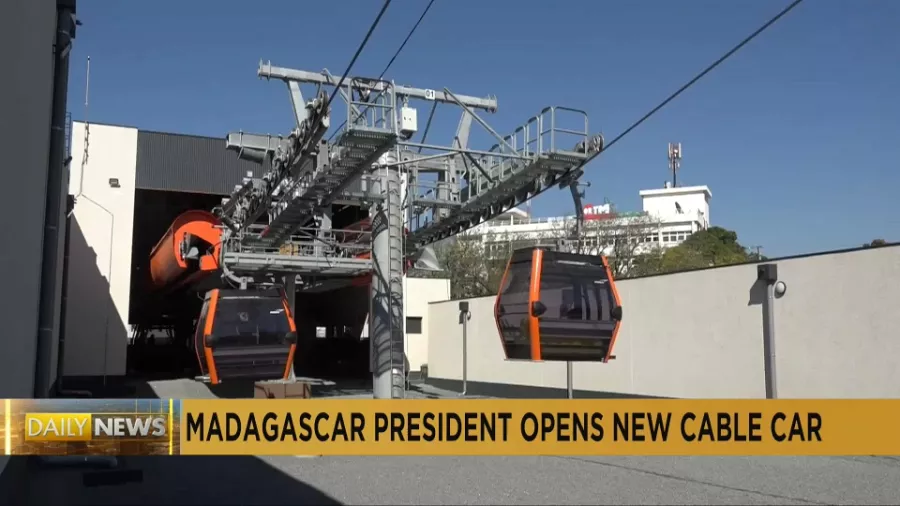
Antananarivo, Madagascar’s bustling capital, has inaugurated its first cable car system, marking a significant step towards alleviating traffic congestion in the city.
President Andriy Rajoelina, alongside city officials and project contractors, took the inaugural ride over the neighborhoods of Antananarivo, showcasing the new transportation initiative.
Designed to potentially accommodate up to 75,000 passengers daily, the cable cars aim to ease the city’s notorious traffic woes, exacerbated by a population exceeding 3 million people.
“Removing 75,000 passengers daily at the bus level and 2,000 cars from the roads of Tana is significant in terms of carbon savings and mobility,” stated Gérard Andriamanohisoa, Secretary of State for New Towns and Housing at the Presidency.
The project, spanning 12 kilometers, was financed through a 152 million Euro loan from France, with extensive safety tests conducted throughout June to ensure passenger security.
“We have installed numerous sensors in the stations and along the line to detect any issues before they arise, ensuring the safety of passengers. Additionally, backup generators are in place to maintain operations during power outages,” explained Guillaume Rannaz, a technical manager at Poma, the project contractors.
Despite these advancements, the cost of tickets, priced at nearly one Euro each, has sparked concern among local residents, many of whom already feel financially strained.
Comparatively, this fare is six times the price of a typical bus ticket, prompting criticism over affordability.
“Some residents argue that critical infrastructure needs, such as consistent electricity and water supply, should have been prioritized over the cable cars,” voiced Henry Razafimanantsoa, an Antananarivo resident frustrated by ongoing social issues.
President Rajoelina, however, remains steadfast in his support for the project, dismissing critiques of increased national debt to France, Madagascar’s former colonial power.
“We must dare to transform and develop our country. Critics have always been there, unable to take action. Whether this project was necessary or not, I say yes,” President Rajoelina asserted.
Drawing parallels to the Eiffel Tower’s initial reception in France, he emphasized the long-term benefits of modern infrastructure investments.
The government has pledged subsidized fares for students and pensioners, aiming to mitigate financial barriers for vulnerable groups.
However, full public access to the cable cars is not scheduled until 2025, pending final preparations and regulatory approvals.