
France, Germany Reaffirm Commitment to €100bn Fighter Jet Project Amid Disputes
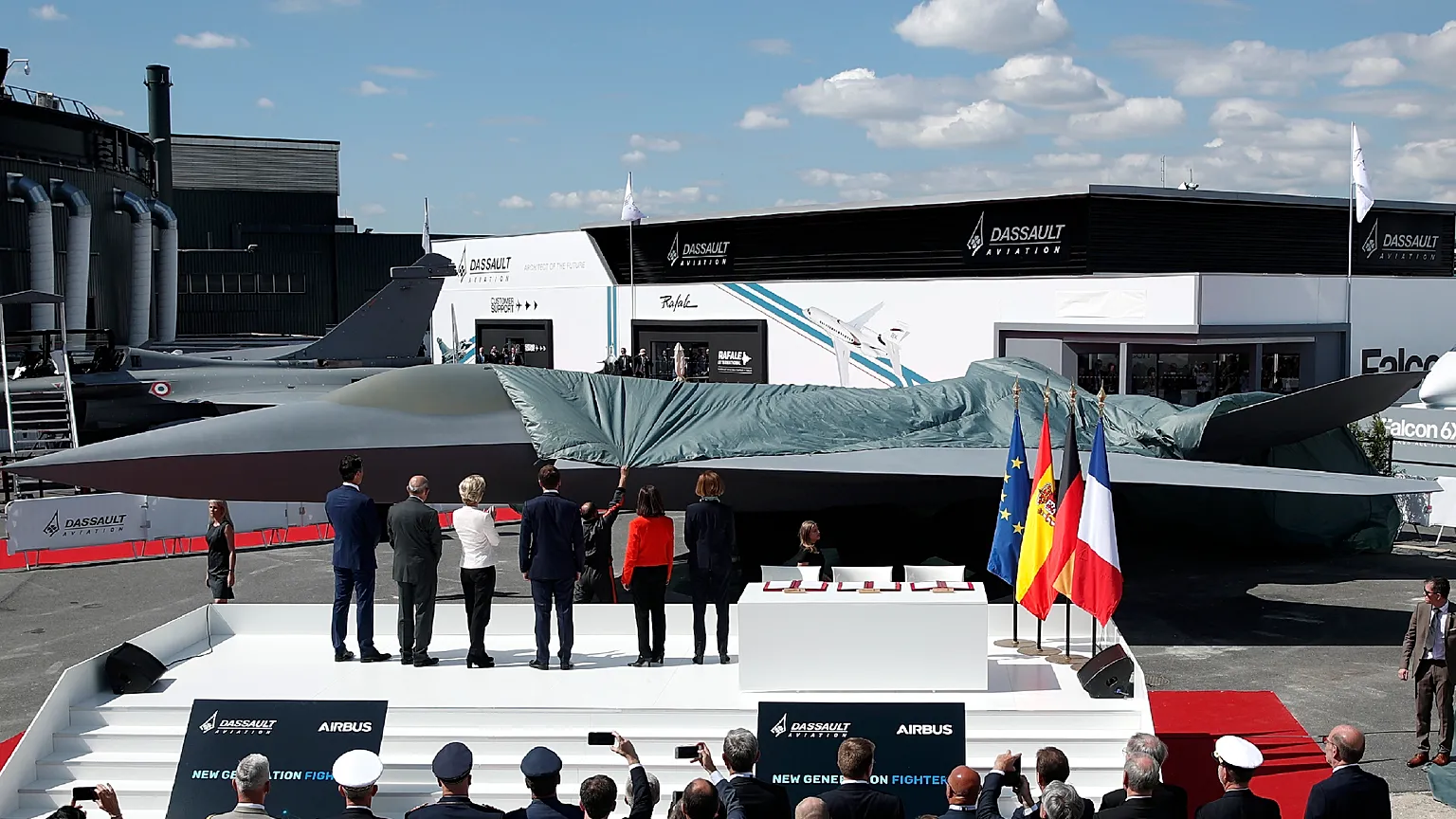
France and Germany have confirmed they will continue working on their joint next-generation fighter jet programme, despite ongoing disagreements over leadership and project control.
French President Emmanuel Macron and German Chancellor Friedrich Merz said on Friday that their defence ministries have been instructed to press ahead with discussions on the Future Combat Air System (FCAS), a major European defence project valued at about €100 billion.
The announcement followed a meeting between both leaders on the sidelines of an EU summit in Cyprus, where Macron dismissed suggestions that the project was collapsing, insisting it remained active.
“No, not at all,” Macron said when asked if the programme was dead, adding that both countries had agreed to continue technical and political work on the initiative.
A German government spokesperson confirmed the directive, stating that defence ministers from both countries had been tasked with agreeing on next steps in the coming weeks.
The FCAS programme, which also includes Spain, is designed to develop a new generation of combat aircraft, drones, and a digital combat network that would allow real-time data sharing between military systems.
However, the project has faced repeated delays and internal disputes, particularly over leadership roles between France’s Dassault Aviation and Germany’s Airbus, which represents both Germany and Spain.
Officials say disagreements over control of the core fighter jet component remain the main sticking point, raising uncertainty about the programme’s long-term structure.
Despite speculation that the joint fighter jet development could be scaled back or restructured, European officials insist cooperation will continue, especially on drone systems and digital battlefield integration.
The FCAS programme is seen as a key effort by Europe to strengthen defence independence and reduce reliance on non-European military technology, even as internal disagreements continue to slow progress.







Comments
This post currently has no comments.