
FG Pushes Public-Private Partnerships to Drive Nigeria’s Economic Growth
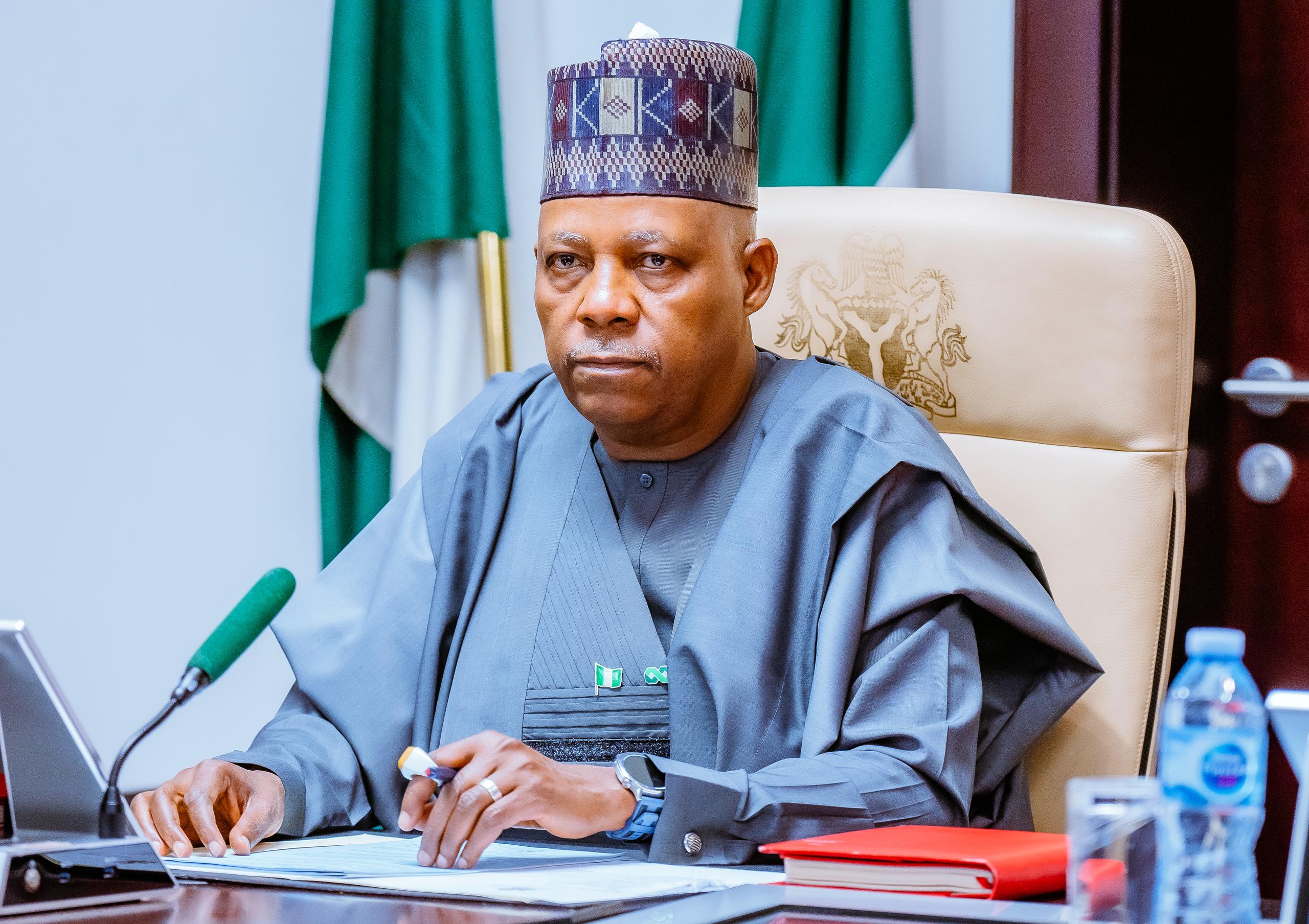
The Federal Government has renewed its commitment to expanding public-private partnerships (PPPs) as part of efforts to boost Nigeria’s economic development and attract global investment.
Vice President Kashim Shettima made this known on Thursday at the first 2026 meeting of the National Council on Privatisation (NCP) held at the Presidential Villa, Abuja.
He said the administration is focused on ensuring that Nigeria becomes a safe and attractive destination for private investors while aligning investments with national development priorities.
According to him, achieving Nigeria’s ambition of becoming a trillion-dollar economy will require a strong balance between government involvement and private sector participation.
“Prosperity does not happen by accident. It is designed, negotiated, protected, and sustained by institutions that understand that national assets must be deployed in the service of the people,” Shettima said.
The Vice President noted that investor confidence is driven by policy consistency and clear economic direction, stressing that capital inflows respond more to stability and reforms than rhetoric.
He also highlighted recent progress in key sectors such as mining, agriculture, and energy, pointing to the sale of Eko Electricity Distribution Company as evidence of growing investor confidence in Nigeria’s privatisation efforts.
Shettima urged the Council to accelerate the development of bankable projects and scale up PPP initiatives to meet national economic targets.
He also warned against policy inconsistencies across government agencies, saying unclear roles and overlapping mandates could weaken investor trust and slow reforms.
The Director-General of the Bureau of Public Enterprises (BPE), Ayodeji Gbeleyi, also briefed the Council on progress in the power sector recovery programme, supported by a $500 million World Bank facility.
He revealed that the programme includes plans to procure about 3.22 million prepaid electricity meters to help close Nigeria’s estimated 5.6 million metering gap.
The government says the ongoing reforms are part of broader efforts to strengthen infrastructure, improve service delivery, and stimulate sustainable economic growth through private sector participation.







Comments
This post currently has no comments.